





Join your neighbours in a smarter way to upgrade your home with renewable energy.
Save money, reduce carbon emissions, and achieve energy independence for your home while participating in collective climate action.
Our streamlined end-to-end process sets you on a journey to energy independence, delivering sustainable savings and a greener future for your home
Quick, free registration with basic home details
We negotiate better prices through collective purchasing
Receive personalised recommendations and pricing
Professional assessment and retrofit design
Expert installation and ongoing support
Most homes in the UK are suitable for heat pumps, regardless of age, type, or construction. Key considerations include:
Community Power
By bringing together multiple households, we create significant buying power that individual homeowners can't achieve alone.
Smart Procurement
Our reverse auction focuses on materials and products only, maintaining fair labour rates to ensure quality installations and support local jobs.
Quality Assured
All installers are MCS-certified and vetted by RetrofitWorks, ensuring professional standards and comprehensive warranties for your peace of mind.
Complete our simple registration process to participate in the group-buy auction process, free of charge. Once the auction is complete, you will receive your Power Up Plan with a tailored offer for your renewable technology upgrades.
Partners & Supporters
Most homes in the UK are suitable for heat pumps, regardless of age, type, or construction. Key considerations include:
All installations meet Microgeneration Certification Scheme standards, ensuring the highest quality and eligibility for government grants.
Every installer is thoroughly vetted by RetrofitWorks, with verified qualifications, insurance, and track record of excellence.
RetrofitWorks provides independent quality assurance throughout your journey, from initial survey to post-installation checks.
Enjoy peace of mind with manufacturer warranties plus installation guarantees, all clearly documented and protected.
Power Up Homes is backed by Muswell Hill Sustainability Group, giving you additional confidence in the scheme's legitimacy and community focus.
Most homes in the UK are suitable for heat pumps, regardless of age, type, or construction. Key considerations include:
Power Up Homes Haringey is a local scheme helping homeowners make their homes more energy efficient and cheaper to run, with combined funding of up to £12,500 and further group-buy auction discounts. By bringing residents together through a group-buy approach, the scheme secures better prices on upgrades such as solar panels, heat pumps and insulation. This includes a mix of council funding, national grants and group-buy savings, helping to significantly reduce upfront costs. The programme provides support at every stage, making it simple and straightforward to improve your home with confidence.
Installing retrofit improvements to your home improves comfort and the health of occupants. This is achieved through more stable indoor temperatures via improved insulation, airtightness, more efficient heating systems, and ventilation benefitting air quality. Solar and battery systems allow for energy security and reduced bills. Initial research also shows that retrofitted homes also benefit from increased asset value.
These savings mean investments go further and allows homeowners to maximise the measures they can install, and thus the benefits that they can achieve. It is a great opportunity to futureproof your home!
Eligible homeowners may benefit from a combination of funding, including up to £7,500 towards a heat pump through the Boiler Upgrade Scheme (BUS), group-buy discounts of up to 25%, and up to £5,000 cashback through the Power Boost Haringey Fund. The total support available will depend on the upgrades installed and your property circumstances.
The table below shows how you can combine different grants and discounts:
| Retrofit Measure | BUS Grant (£7,500) | Group-Buy Discount (up to 25%) | PBHF Grant (up to £5,000) |
|---|---|---|---|
| Air Source Heat Pump (ASHP) | ✅ Yes | ✅ Yes | ✅ Yes — when combined with at least one other measure |
| Solar PV | ❌ No | ✅ Yes | ✅ Yes — when combined with at least one other measure |
| Battery Storage | ❌ No | ✅ Yes | ✅ Yes — when combined with at least one other measure |
| Insulation / Fabric Improvements | ❌ No | ❌ No | ✅ Yes — when combined with at least one other measure |
The Power Boost Haringey Fund is issued by Haringey Council after installation works are completed and evidence of this has been provided to the council by the homeowner. This helps ensure public funding is used appropriately and that improvements have been delivered as agreed. Applications must be made prior to installation, as the grants of up to £5,000 are available on a first-come, first-served basis.
To access the application form and for more information visit: https://haringey.gov.uk/environment/climate/power-boost-haringey-fund
The fund is available to private homeowners living in the London Borough of Haringey who are installing more than one measure through the Power Up Homes scheme. They should not be receiving other public funding for the same works (other than BUS for the heat pump installation, or the discounts from Power Up auction of up to 25%).
After you apply to the council’s fund (via climate@haringey.gov.uk), the council will assess whether you are eligible for funding and what the funding amount would be. This will be based on submitting all the necessary information.
Grants of up to £5,000 are available on a first-come, first-served basis. The council only has £100,000 available for grants. This means it is beneficial to register early and ensure you follow the necessary steps before applying, e.g. paying deposits and arranging home visits straight away.
Your Power Up Plan will include measures that our installers are capable of installing within this scheme. This will include:
We will not be supporting LED lighting, external wall insulation or ventilation measures at this time. Your assessor will discuss ventilation options to ensure that your home will still be ventilated enough after you install your improvements. Good ventilation is important for good indoor air quality and to prevent the build-up of moisture that may cause damp and mould. It is also a regulatory requirement depending on the combination of insulation measures you install. For more details see here: https://www.gov.uk/government/publications/ventilation-approved-document-f
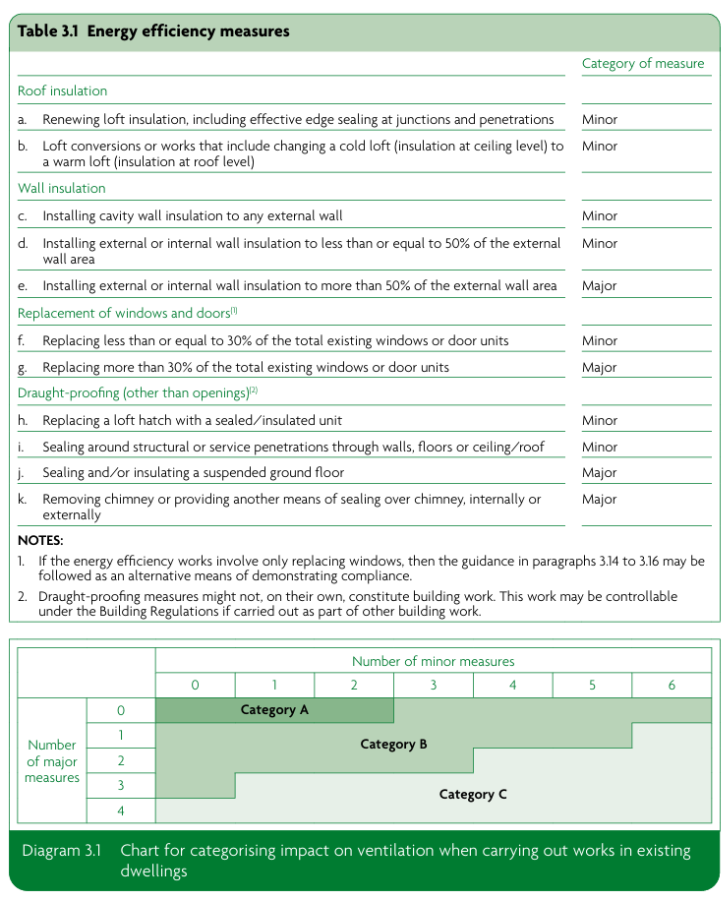
The Power Boost Haringey Fund can support the installation of new air source heat pumps, solar panels, battery storage and insulation measures.
Insulation measures can include:
Please see Haringey’s website to clarify what two or three measures apply.
Where households are considering multiple fabric improvements alongside renewable technologies, we strongly recommend a tailored home assessment as part of the design process.
This may include a streamlined “Mini Whole House Plan”, which provides a practical overview of your home, helping assess how different measures may work together and identifying any key technical considerations before installation. The aim is to ensure proposed improvements are suitable for the property, appropriately sequenced where needed, and designed to support long-term comfort, performance and compliance.
Depending on the complexity of the property and measures proposed, some households may also choose to commission a more detailed Retrofit Assessment or Whole House Plan delivered by qualified retrofit professionals.
Savings will depend on your current heating system and how much energy your home uses. Many households replacing oil, LPG or electric heating systems see significant savings. For homes switching from gas, running costs can be similar initially, but with improved efficiency and better protection against rising fuel prices over time.
For example, air source heat pumps are typically around three times more efficient than gas boilers, meaning they use less energy to produce the same level of heat. However, they run on electricity, which is currently more expensive per unit than gas. In practice, this means overall costs depend on how efficiently the system is designed and set up, and how the home is used.
This is why Power Up Homes Haringey takes a whole-home approach, combining technologies such as solar PV and battery storage with fabric improvements like insulation. Generating your own electricity and reducing heat loss can help offset electricity use and maximise the overall savings from low-carbon systems.
Customers who opt into ongoing servicing and support plans can further improve performance over time. These plans typically include monitoring system performance, reviewing energy usage and fine-tuning system settings year-on-year to ensure the system is operating as efficiently as possible and delivering the best outcomes for the home.
Most installations such as heat pumps and solar panels are typically classed as permitted development, meaning planning permission is not usually required. However, additional permissions may be needed for listed buildings or properties in or adjacent to conservation areas covered by Article 4:
More information is available at:
Proposals for solar panels and heat pumps with an external unit will need to be assessed for their suitability.
If your home is within a Conservation Area, permitted development rights may not apply. You would need to apply for planning permission to proceed.
Insulation, airtightness and window measures are likely to be suitable, and a Retrofit Assessor can confirm this for you if you are interested in exploring this. A Heat Pump may also be possible if there is a suitable place to install the external unit and whether any other flats have a heat pump installed already. This will be explored by your Renewables surveyor. If it is not possible, your £150 will be returned to you.
Solar can be a little more complex, you would need to contact your freeholder and/or the other leaseholder(s) to discuss options for delivering solar panels and battery systems within your building. With the necessary and relevant consents, we may be able to install solar panels for the building.
You can still consider other upgrade options, including insulation measures or a heat pump if there is a suitable place to install the external unit.
Yes. In England, air source heat pump installations must comply with the MCS 020a noise assessment standard, which sets a limit of 37 dB(A) (LAeq over 5 minutes) measured at the nearest neighbouring property’s habitable room (such as a window or door).
This is not a direct on-site measurement but a calculated assessment carried out at design stage. The calculation uses manufacturer sound data alongside factors such as distance to neighbouring properties, positioning, and any reflecting surfaces or barriers.
Compliance with this limit is required for installations to qualify under Permitted Development rights. If the calculated noise level exceeds 37 dB(A), planning permission may be required.
To ensure compliance, installations are carefully designed to optimise unit location, select appropriate equipment, and incorporate mitigation measures where needed (e.g. increased separation distances or acoustic screening). This ensures systems operate efficiently while minimising any impact on neighbouring properties.
The Power Up Homes Haringey scheme is delivered by RetrofitWorks, a not-for-profit cooperative working with vetted local contractors and community partners. Installations follow recognised industry standards and include quality assurance and warranty protection.
The Power Boost Haringey Fund is run by Haringey Council, in partnership with RetrofitWorks. The fund is delivered as part of the Power Up Homes Haringey scheme. Improvement measures that are funded by the Power Boost Haringey Fund are delivered by RetrofitWorks.
Timescales vary depending on demand and the type of improvements being installed. From initial registration to completed installation, the process typically takes 8 to 16 weeks and once final approvals and deposits are in place.
Installers take part in a structured group-buy auction process, where trusted suppliers compete to offer the best balance of quality and price. All participating contractors are vetted and must meet recognised industry standards for retrofit delivery.
The group-buy auction will take place once enough people have registered with Power Up Homes. We expect to run several auctions between March and August to allow for people signing up at different times. We highly recommend that you sign up early to take advantage of the Power Boost Haringey Fund.
Yes. Homeowners receive a tailored improvement plan and technical guidance to help them understand suitable upgrades for their property. This helps ensure improvements are appropriate, deliver real energy savings and align with recognised retrofit standards.
Installations are delivered by vetted contractors and include quality assurance checks, warranties and consumer protections. RetrofitWorks also provides oversight to help ensure works are completed to the required standard. You can contact RetrofitWorks if you have any issues.
All renewables works will be installed under MCS frameworks. This offers an additional layer of quality oversight and feedback mechanism on your satisfaction with the service.
Installing multiple improvements together can increase energy savings, improve comfort and maximise available financial support. A whole home approach also helps ensure that new technologies, such as heat pumps and insulation, perform efficiently and work well together. For example, by insulating your home, you reduce your heat losses, reduce the amount of heating you need, and may need a lower capacity heat pump to heat your home.
Your Renewables installer will make all the necessary applications on your behalf once you agree the finalised quotes, and have paid your installation deposit. A DNO notification is required for both Solar and Heat Pump installations, but the BUS grant only applies to Heat Pumps.
No, One of the key benefits is that you can work under our established MCS-certified partner. This removes the expensive and time-consuming barrier of getting your own certification.
No, subscription fees or fleet requirements, but you do need a van and your own tools. We remove traditional financial barriers to entering the domestic retrofit market.
We offer observation and shadowing opportunities for vetted candidates looking to enter the sector. If you're willing to train and meet our vetting criteria, we can discuss a pathway for you.
Air Source Heat Pumps, Solar PV, and battery storage systems. You can specialise in one technology or work with multiple, depending on your qualifications and preferences.
RetrofitWorks manages customer communications and project coordination. We help you achieve quality-compliant installations through our performance monitoring system to maintain standards. Installation quality is your responsibility and we quality assure the works to protect consumers and support your development.
If the detailed technical assessment shows that installation is not feasible, or if costs increase significantly beyond your initial expectations, your assessment deposit will be refunded.